Allanalysis | Laboratory Tests, Products & Health Services
Allanalysis
...Precision + Speed
Request Call Back
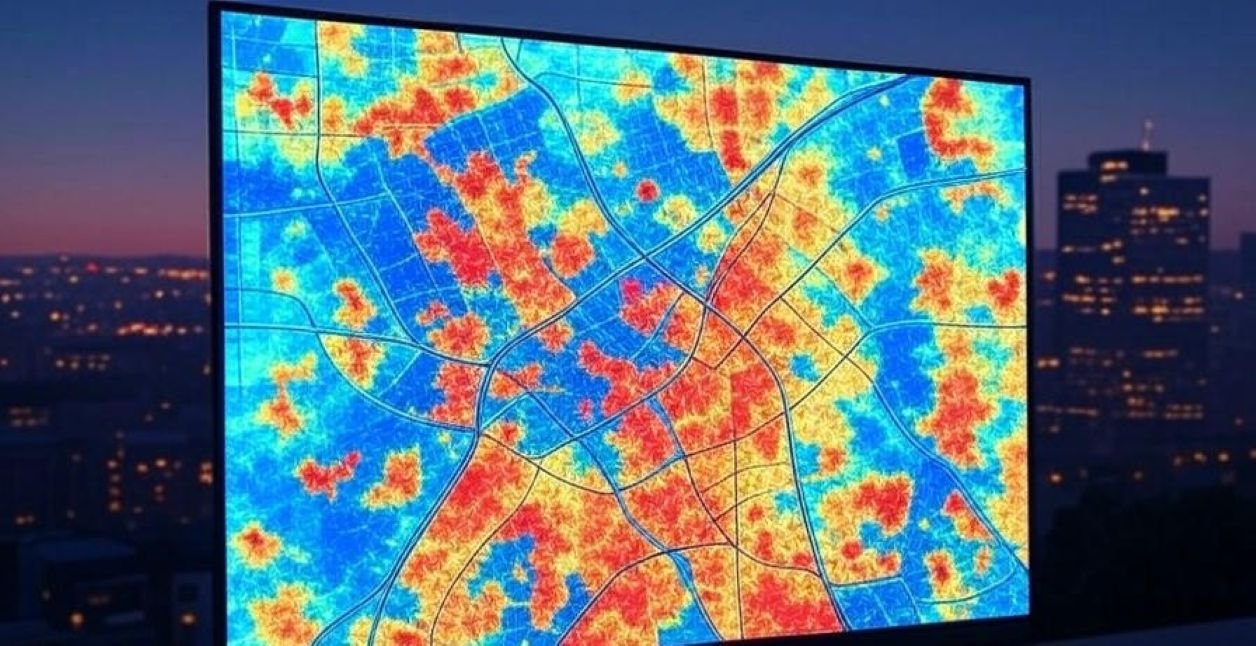
Featured image for Object-Based Image Analysis (OBIA) – Object-based remote-sensing classification workflow for Remote-sensing imagery
Imaging & scan service
Data Object-based remote-sensing classification Code: SCAN0789

Object-Based Image Analysis (OBIA)

Provider: Allschoolabs Verified Provider · 5–10 days estimated delivery

Service price

₦90,000₦119,700

per spatial-analysis project
Discount for partners
Estimated turnaround5–10 days
Modality / methodObject-based remote-sensing classification
Body / sample / data targetRemote-sensing imagery
⭐ Reviews

How to Request This Scan

  1. Click Request / Book Scan.
  2. Provide the requested patient, sample, instrument or data information and preferred service details.

Before ordering Object-Based Image Analysis (OBIA), confirm the number and size of files, expected complexity, whether data cleaning is included, the number of revision rounds, required software/output format, and whether you need raw code/files in addition to the final report.

Final eligibility, preparation and safety requirements should be confirmed with the service provider before the procedure.

About Object-Based Image Analysis (OBIA)

Object-Based Image Analysis (OBIA) is a data-analysis service for Remote-sensing imagery using Object-based remote-sensing classification. It is designed to address segment and classify high-resolution imagery with a workflow matched to your study question, data structure and intended output rather than applying a one-size-fits-all analysis.

Preparation & Service Guide

Who this service is for
Object-Based Image Analysis (OBIA) is suitable for researchers, students, clinicians, laboratories, NGOs, businesses and project teams that already have remote-sensing imagery and need this specific analysis to answer a defined analytical question. A clear objective and well-documented dataset will substantially improve the usefulness of the result.
Preparation instructions
Please remove passwords from files you intend to submit, keep an untouched backup of your original data, and provide a short data dictionary explaining variable names, units, codes, missing-value conventions and any exclusions already made. Identify the target variable or task, available features, unit of observation, class labels, train/test constraints and the metric that matters most to you. Flag duplicated subjects, leakage-prone variables and any data that must remain in a held-out set. Supply coordinate reference system information, spatial extent, acquisition dates, layer descriptions and the output projection/scale you require. For raster data, include resolution and NoData conventions where known. Use original-resolution image or DICOM files rather than screenshots where possible. Provide consistent file naming, region-of-interest instructions, calibration/scale information and any labels or ground truth needed for comparison. For Object-Based Image Analysis (OBIA), also tell the analyst about any unusual coding, exclusions, transformations or prior processing that could change how this dataset should be handled.
What you need to provide
For Object-Based Image Analysis (OBIA), provide the analysis objective, dataset or file inventory, variable/data dictionary, study or business context, desired tables/figures, required software or reporting format if any, deadline, and a note identifying any confidential or regulated information in the files.
What to expect
Your analyst will review the files for structure and obvious quality issues, confirm the analytical approach for Object-Based Image Analysis (OBIA), run the appropriate object-based remote-sensing classification workflow, and return the agreed outputs. Where relevant, deliverables may include cleaned data, code, statistical tables, figures, model diagnostics, maps, annotated images or an interpretation summary.
Safety, contraindications & cautions
For Object-Based Image Analysis (OBIA), only submit data you are authorised to share. Remove direct personal identifiers whenever they are not essential, and use secure transfer for clinical, genomic, financial or other sensitive information. AnalysisAfrica service providers should not be asked to fabricate, alter or selectively suppress results to reach a preferred conclusion.
Result format & interpretation
The output from Object-Based Image Analysis (OBIA) should be read together with the stated assumptions, data-quality limitations and analysis plan. Statistical significance, model accuracy or algorithmic classification does not by itself prove causation or clinical validity; conclusions should remain proportionate to the design and quality of the underlying data.
Other important information
Changes to variables, endpoints, inclusion criteria or requested figures after work on Object-Based Image Analysis (OBIA) has started may require re-analysis and an updated quote. If reproducibility matters, request the analysis script, software/package versions, parameter settings and a record of data-cleaning decisions as part of the deliverables.

Questions About Object-Based Image Analysis (OBIA)

How much does Object-Based Image Analysis (OBIA) cost?

The current listed price is ₦90,000 per spatial-analysis project. Final charges may depend on provider-specific requirements or additional services.

How long does Object-Based Image Analysis (OBIA) take?

The estimated result delivery time shown for this service is 5–10 days. Actual timing may vary with preparation, image acquisition, specialist review or data quality.

How should I prepare for Object-Based Image Analysis (OBIA)?

Please remove passwords from files you intend to submit, keep an untouched backup of your original data, and provide a short data dictionary explaining variable names, units, codes, missing-value conventions and any exclusions already made. Identify the target variable or task, available features, unit of observation, class labels, train/test constraints and the metric that matters most to you. Flag duplicated subjects, leakage-prone variables and any data that must remain in a held-out set. Supply coordinate reference system information, spatial extent, acquisition dates, layer descriptions and the output projection/scale you require. For raster data, include resolution and NoData conventions where known. Use original-resolution image or DICOM files rather than screenshots where possible. Provide consistent file naming, region-of-interest instructions, calibration/scale information and any labels or ground truth needed for comparison. For Object-Based Image Analysis (OBIA), also tell the analyst about any unusual coding, exclusions, transformations or prior processing that could change how this dataset should be handled.

What do I need to provide?

For Object-Based Image Analysis (OBIA), provide the analysis objective, dataset or file inventory, variable/data dictionary, study or business context, desired tables/figures, required software or reporting format if any, deadline, and a note identifying any confidential or regulated information in the files.

Are there important safety considerations?

For Object-Based Image Analysis (OBIA), only submit data you are authorised to share. Remove direct personal identifiers whenever they are not essential, and use secure transfer for clinical, genomic, financial or other sensitive information. AnalysisAfrica service providers should not be asked to fabricate, alter or selectively suppress results to reach a preferred conclusion.

Quick Booking

Request this scan or imaging service, submit your requirements, or ask for a provider quotation.

Request / Book Scan Ask a Question Get Lab Materials Browse More Scans
See Procedures

Study Procedures & Methodologies

Access articles & scientific papers, medical journals and analytical research.

Open
Need help?Chat with us or request a test
or contact us
Chat now